
CREDITS – All images sourced from Kelly Hoppen’s team and Instagram
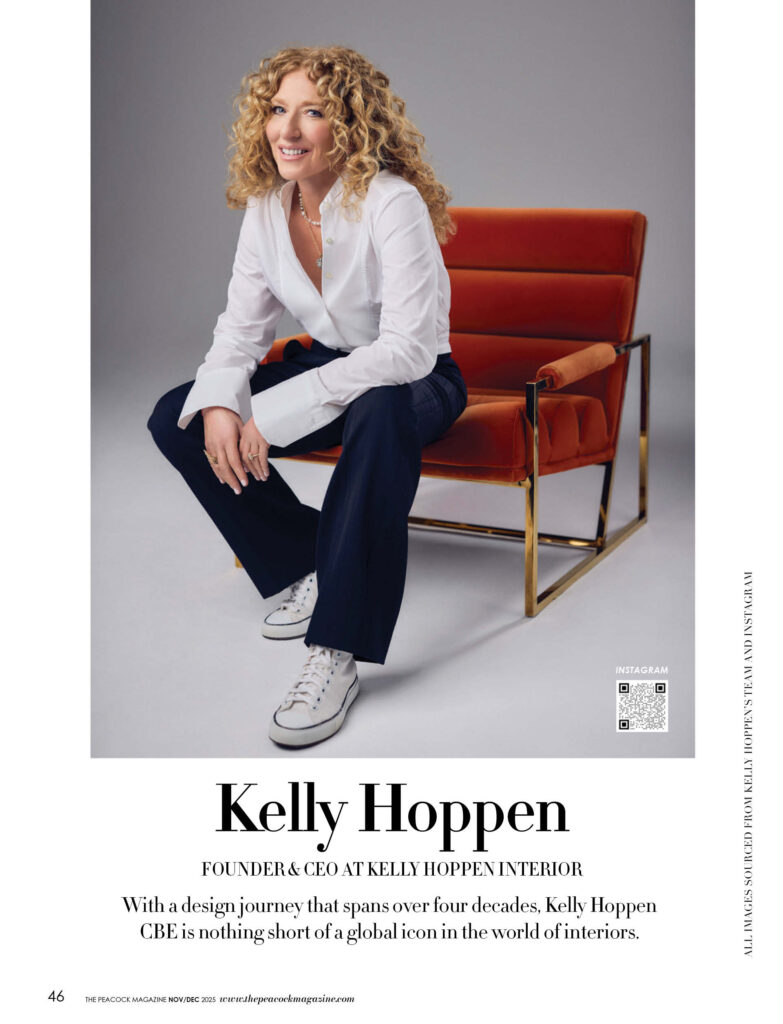
With a design journey that spans over four decades, Kelly Hoppen CBE is nothing short of a global icon in the world of interiors.
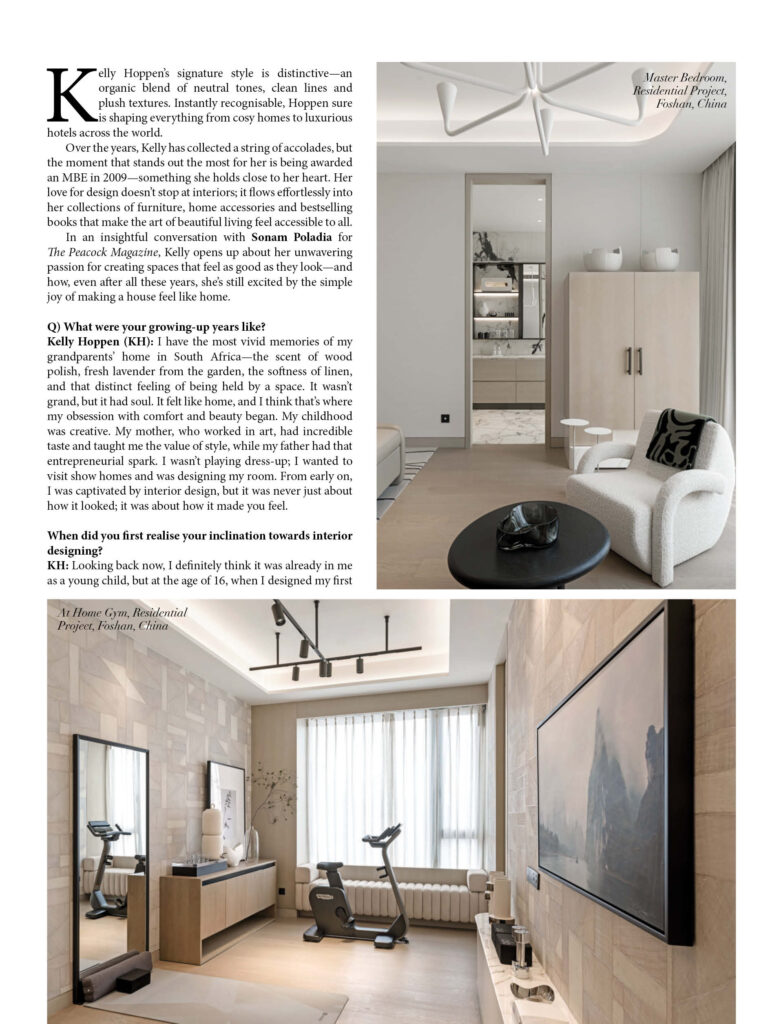
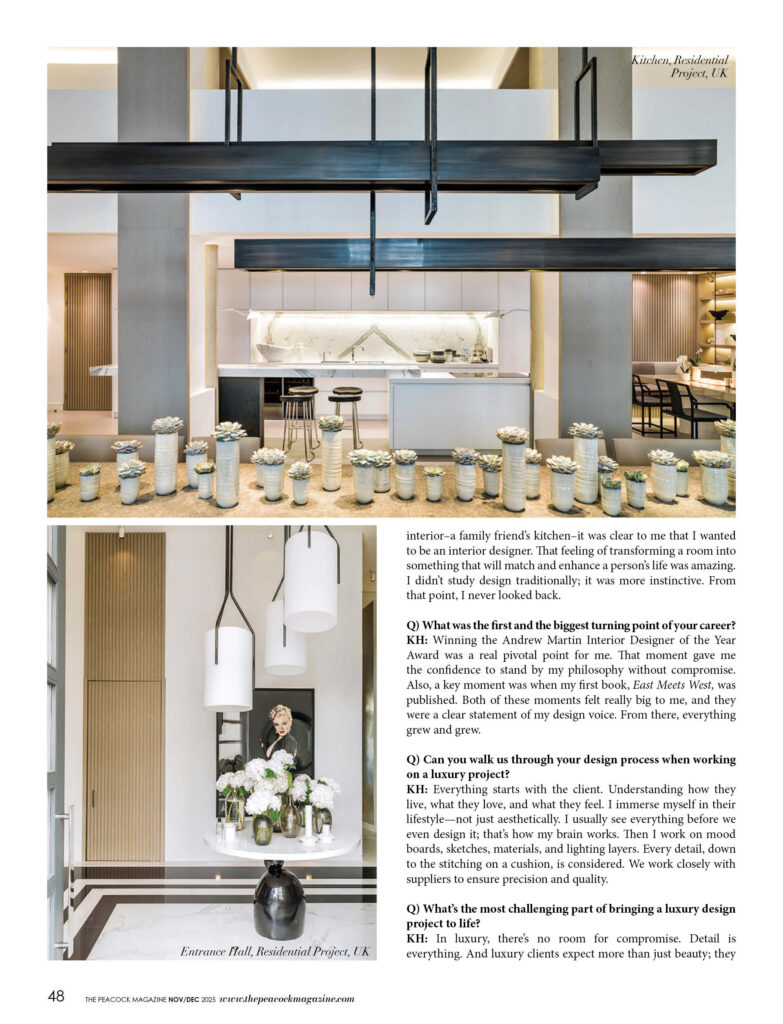
Kelly Hoppen’s signature style is distinctive—an organic blend of neutral tones, clean lines and plush textures. Instantly recognisable, Hoppen sure is shaping everything from cosy homes to luxurious hotels across the world.
Over the years, Kelly has collected a string of accolades, but the moment that stands out the most for her is being awarded an MBE in 2009—something she holds close to her heart. Her love for design doesn’t stop at interiors; it flows effortlessly into her collections of furniture, home accessories and bestselling books that make the art of beautiful living feel accessible to all.
In an insightful conversation with Sonam Poladia for The Peacock Magazine, Kelly opens up about her unwavering passion for creating spaces that feel as good as they look—and how, even after all these years, she’s still excited by the simple joy of making a house feel like home.
Q) What were your growing-up years like?
Kelly Hoppen (KH): I have the most vivid memories of my grandparents’ home in South Africa—the scent of wood polish, fresh lavender from the garden, the softness of linen, and that distinct feeling of being held by a space. It wasn’t grand, but it had soul. It felt like home, and I think that’s where my obsession with comfort and beauty began. My childhood was creative. My mother, who worked in art, had incredible taste and taught me the value of style, while my father had that entrepreneurial spark. I wasn’t playing dress-up; I wanted to visit show homes and was designing my room. From early on, I was captivated by interior design, but it was never just about how it looked; it was about how it made you feel.
When did you first realise your inclination towards interior designing?
KH: Looking back now, I definitely think it was already in me as a young child, but at the age of 16, when I designed my first interior–a family friend’s kitchen–it was clear to me that I wanted to be an interior designer. That feeling of transforming a room into something that will match and enhance a person’s life was amazing. I didn’t study design traditionally; it was more instinctive. From that point, I never looked back.
Q) What was the first and the biggest turning point of your career?
KH: Winning the Andrew Martin Interior Designer of the Year Award was a real pivotal point for me. That moment gave me the confidence to stand by my philosophy without compromise. Also, a key moment was when my first book, East Meets West, was published. Both of these moments felt really big to me, and they were a clear statement of my design voice. From there, everything grew and grew.
Q) Can you walk us through your design process when working on a luxury project?
KH: Everything starts with the client. Understanding how they live, what they love, and what they feel. I immerse myself in their lifestyle—not just aesthetically. I usually see everything before we even design it; that’s how my brain works. Then I work on mood boards, sketches, materials, and lighting layers. Every detail, down to the stitching on a cushion, is considered. We work closely with suppliers to ensure precision and quality.
Q) What’s the most challenging part of bringing a luxury design project to life?
KH: In luxury, there’s no room for compromise. Detail is everything. And luxury clients expect more than just beauty; they expect perfection, innovation, discretion, and speed. And whilst that can be challenging, it’s also very rewarding.
Q) How do you collaborate with your team to ensure that every detail meets your exceptionally high standards?
KH: It’s all about communication and vision. My team knows that I’m all about detail, but they also know why. We work as one team, with transparency and shared expectations. We also review constantly, and we refine as needed. I have to say, I have an amazingly talented team who work hard–from design directors to stylists, everyone is encouraged to be creative and take ownership.
Q) How do you tailor your design approach to meet the unique needs and tastes of your celebrity clients?
KH: Everyone wants a home that reflects them, not their public persona. My job is to listen—really listen. What makes them feel calm? What textures do they love? What grounds them? I then tailor everything to how they live. And I protect all my clients’ privacy.
Q) Your design aesthetic is renowned for its timeless elegance and luxe vibe. What inspires your approach to luxury design?
KH: Harmony, balance, East-meets-West, texture with tone, minimalism and warmth. I draw inspiration from travel, art, architecture, music and nature. But above all, I’m inspired by how people live. Luxury, for me, isn’t about labels. It’s about serenity, fluidity, and emotional resonance. I want spaces to feel effortless. That takes vision, restraint, and a deep understanding of proportion.
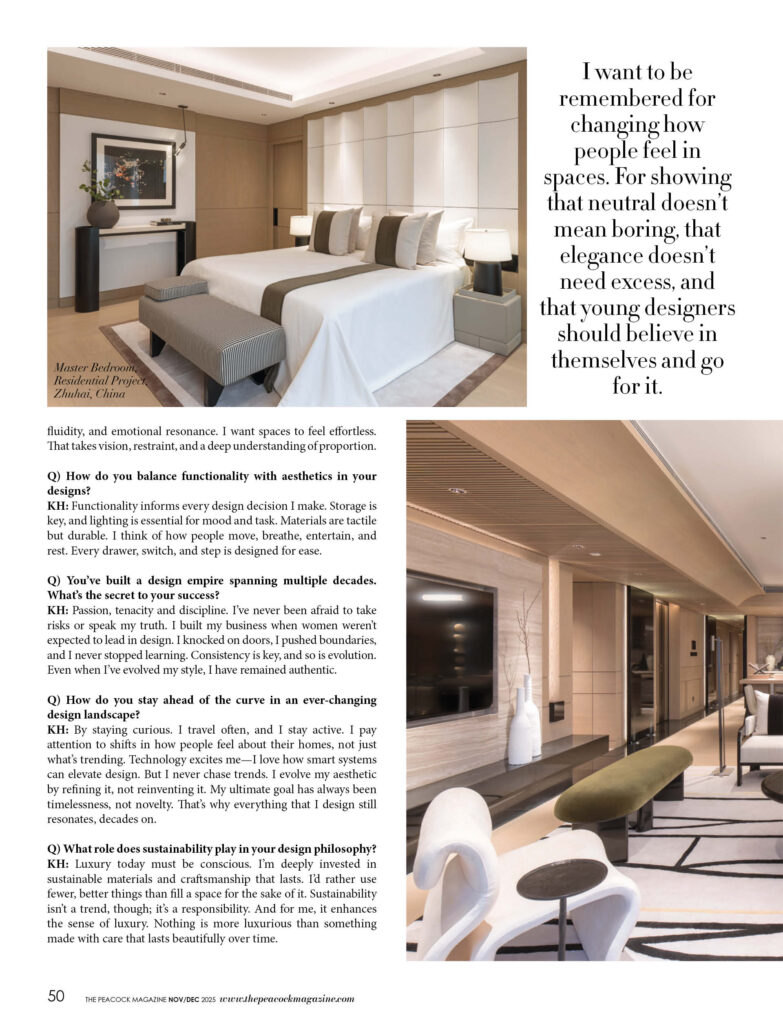
Q) How do you balance functionality with aesthetics in your designs?
KH: Functionality informs every design decision I make. Storage is key, and lighting is essential for mood and task. Materials are tactile but durable. I think of how people move, breathe, entertain, and rest. Every drawer, switch, and step is designed for ease.
Q) You’ve built a design empire spanning multiple decades. What’s the secret to your success?
KH: Passion, tenacity and I’ve never been afraid to take risks or speak my truth. I built my business when women weren’t expected to lead in design. I knocked on doors, I pushed boundaries, and I never stopped learning. Consistency is key, and so is evolution. Even when I’ve evolved my style, I have remained authentic.
Q) How do you stay ahead of the curve in an ever-changing design landscape?
KH: By staying curious. I travel often, and I stay active. I pay attention to shifts in how people feel about their homes, not just what’s trending. Technology excites me—I love how smart systems can elevate design. But I never chase trends. I evolve my aesthetic by refining it, not reinventing it. My ultimate goal has always been timelessness, not novelty. That’s why everything that I design still resonates, decades on.
Q) What role does sustainability play in your design philosophy?
KH: Luxury today must be conscious. I’m deeply invested in sustainable materials and craftsmanship that lasts. I’d rather use fewer, better things than fill a space for the sake of it. Sustainability isn’t a trend, though; it’s a responsibility. And for me, it enhances the sense of luxury. Nothing is more luxurious than something made with care that lasts beautifully over time.
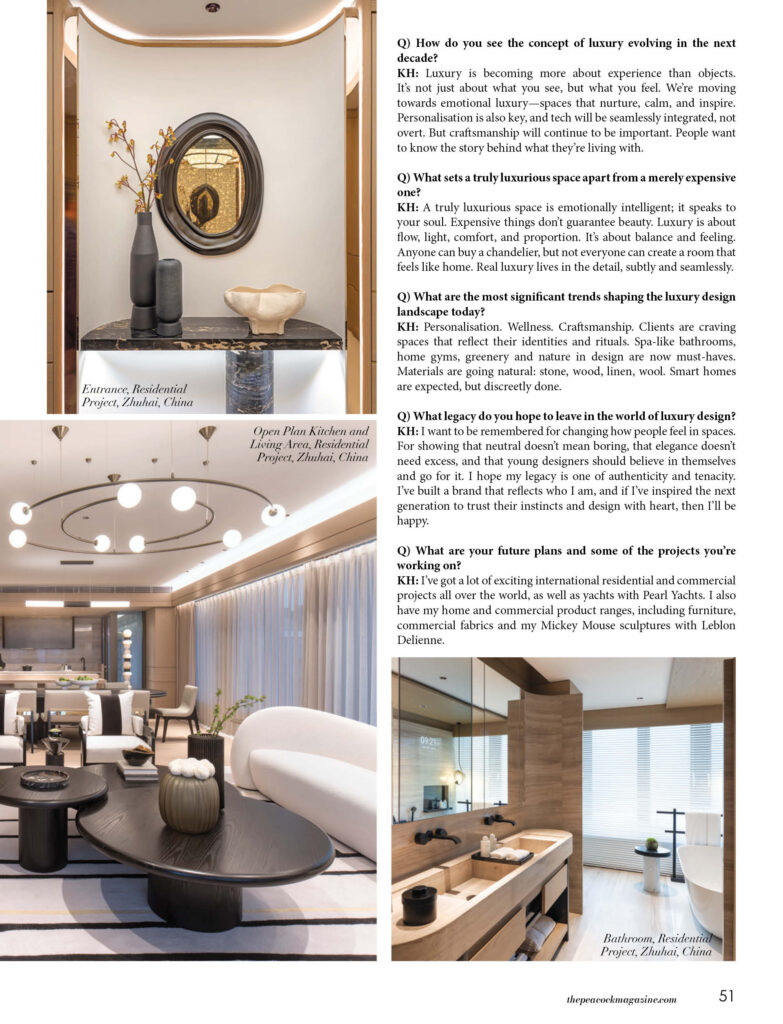
Q) How do you see the concept of luxury evolving in the next decade?
KH: Luxury is becoming more about experience than objects. It’s not just about what you see, but what you feel. We’re moving towards emotional luxury—spaces that nurture, calm, and inspire. Personalisation is also key, and tech will be seamlessly integrated, not overt. But craftsmanship will continue to be important. People want to know the story behind what they’re living with.
Q) What sets a truly luxurious space apart from a merely expensive one?
KH: A truly luxurious space is emotionally intelligent; it speaks to your soul. Expensive things don’t guarantee beauty. Luxury is about flow, light, comfort, and proportion. It’s about balance and feeling. Anyone can buy a chandelier, but not everyone can create a room that feels like home. Real luxury lives in the detail, subtly and seamlessly.
Q) What are the most significant trends shaping the luxury design landscape today?
KH: Personalisation. Wellness. Craftsmanship. Clients are craving spaces that reflect their identities and rituals. Spa-like bathrooms, home gyms, greenery and nature in design are now must-haves. Materials are going natural: stone, wood, linen, wool. Smart homes are expected, but discreetly done.
Q) What legacy do you hope to leave in the world of luxury design?
KH: I want to be remembered for changing how people feel in spaces. For showing that neutral doesn’t mean boring, that elegance doesn’t need excess, and that young designers should believe in themselves and go for it. I hope my legacy is one of authenticity and I’ve built a brand that reflects who I am, and if I’ve inspired the next generation to trust their instincts and design with heart, then I’ll be happy.
Q) What are your future plans and some of the projects you’re working on?
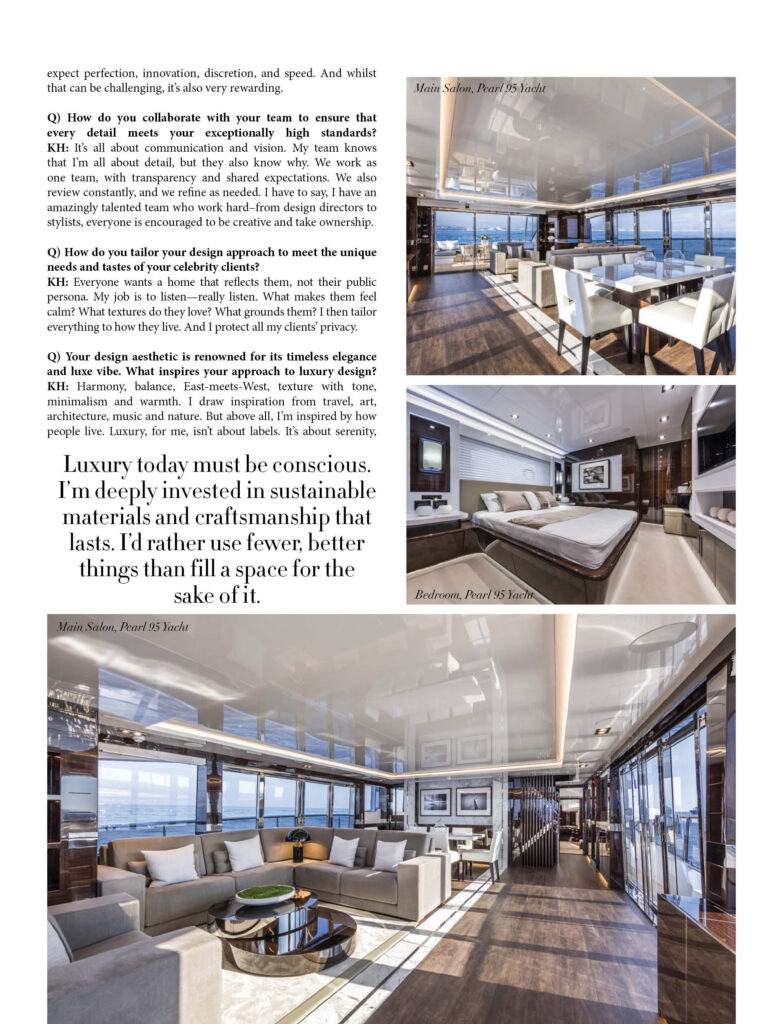
KH: I’ve got a lot of exciting international residential and commercial projects all over the world, as well as yachts with Pearl Yachts. I also have my home and commercial product ranges, including furniture, commercial fabrics and my Mickey Mouse sculptures with Leblon Delienne.