

Credits:
Photographer: Colston Julian
Videographer: Rishab Saini
Stylist: Rahul Vijay
Hair & Makeup: Bugz
Production: FSP Productions
Artist Management: Third Man Global
Artist PR: Dream N Hustle Media
Wardrobe: Falguni Shane Peacock
By Manish Mishra
In an exclusive interview with The Peacock Magazine, the sitar prodigy talks about his family’s musical legacy, challenges that he faced over time, his connection to maestro Ravi Shankar, how he found way of healing mental battles and more…
If you hear the iconic Harry Potter tune played on the sitar, then know that Rishab Rikhiram Sharma has taken over the stage. The coming-of-age sitarist, music producer, and mental health advocate has gained recognition and captivated audiences across the globe. Born into the world-famous Rikhi Ram family of sitar makers in Delhi, Rishab’s work with the sitar speaks for itself.
In a world where learning and practising musical instruments is increasingly recognised for its therapeutic benefits, Rishab is helping break stereotypes and raise awareness about the importance of mental health. A firm believer in the healing power of music, he has been vocal about his own experiences with anxiety and depression. Over the years, he has taken several initiatives and founded Sitar for Mental Health, which offers online sessions, workshops, and collaborations with mental health professionals, making music therapy more accessible to wider audiences.
Rishab has already carved a distinct space for himself in the industry, while also carrying forward a remarkable musical legacy as the last disciple of Pandit Ravi Shankar. By blending traditional sounds with contemporary musical influences, he has found a unique balance between heritage and modernity. By stepping into Bollywood with Ramayana, Rishab has taken his musical journey a notch higher. The Ranbir Kapoor starrer would be his musical debut in the entertainment industry.
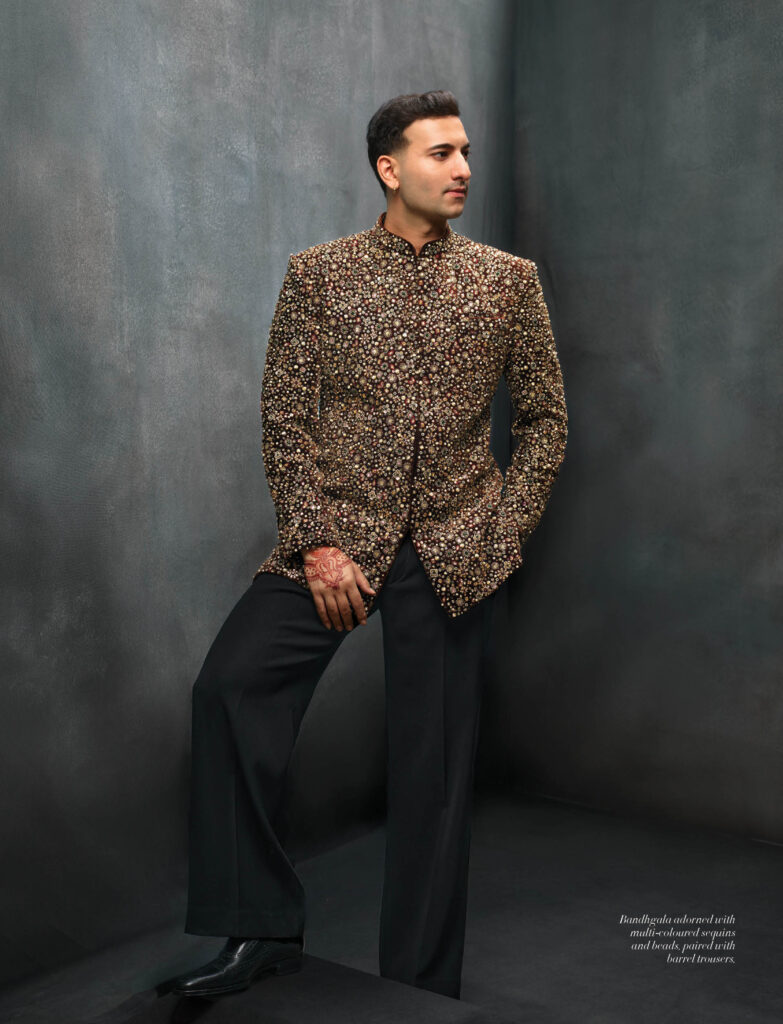
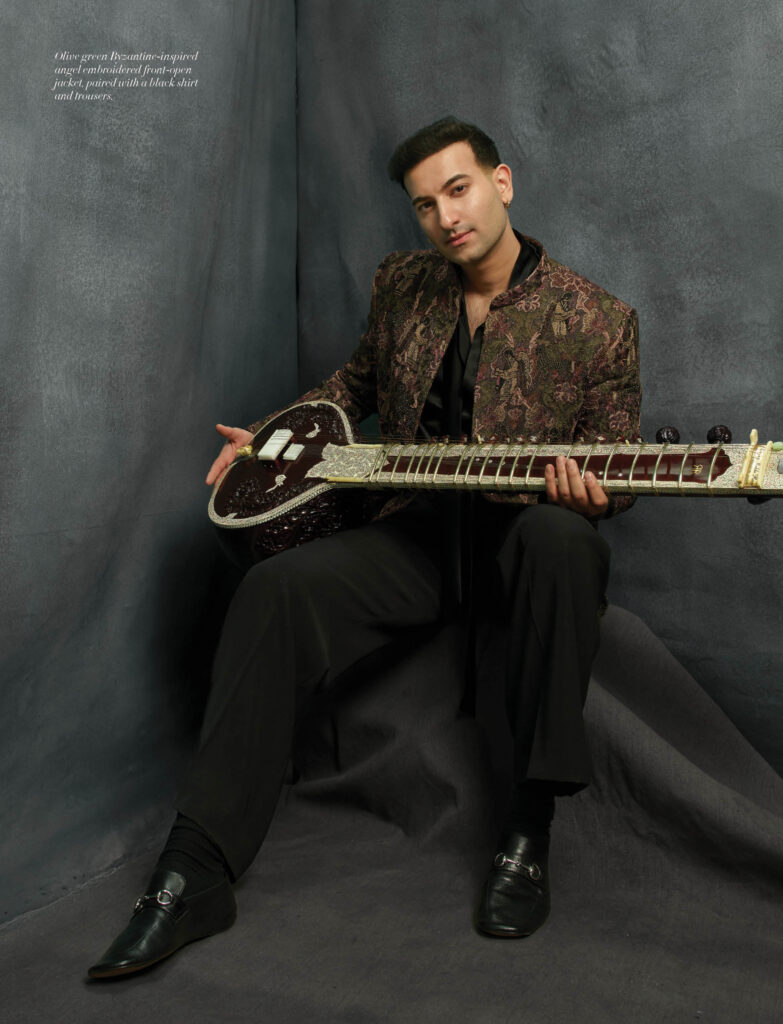
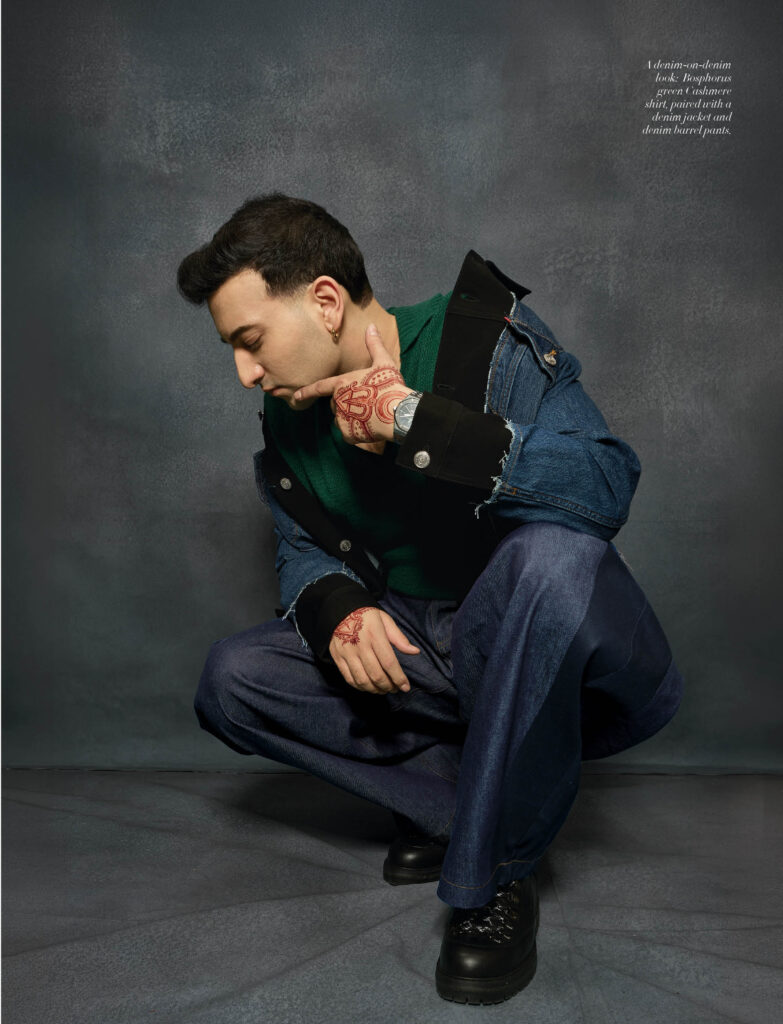
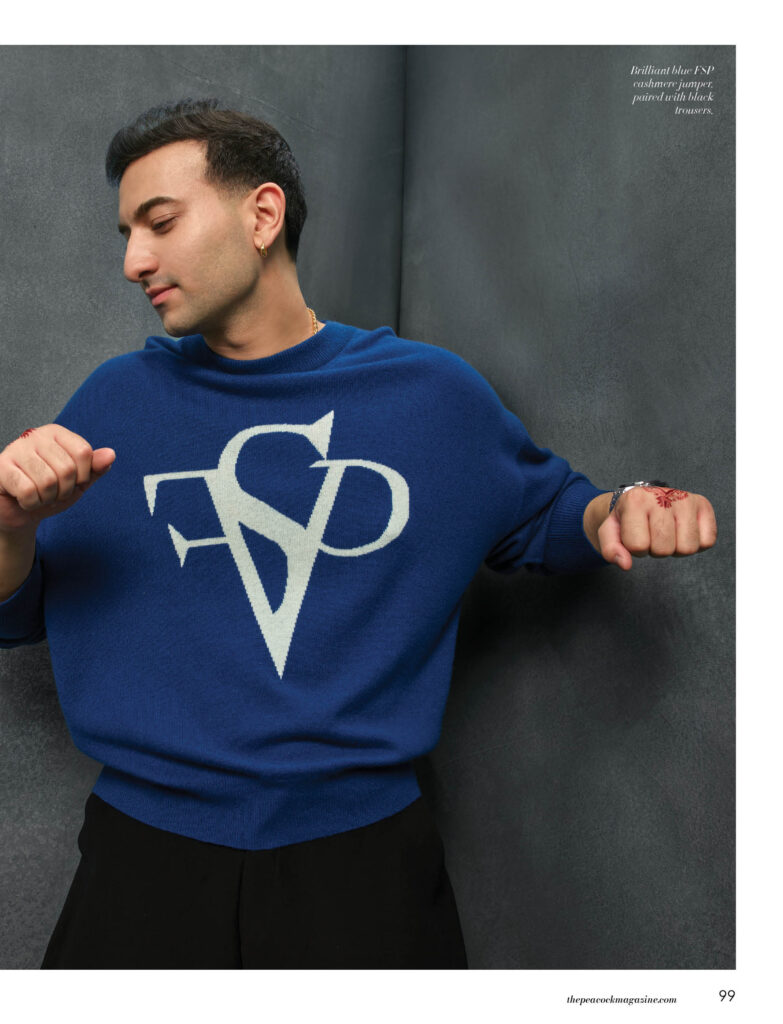
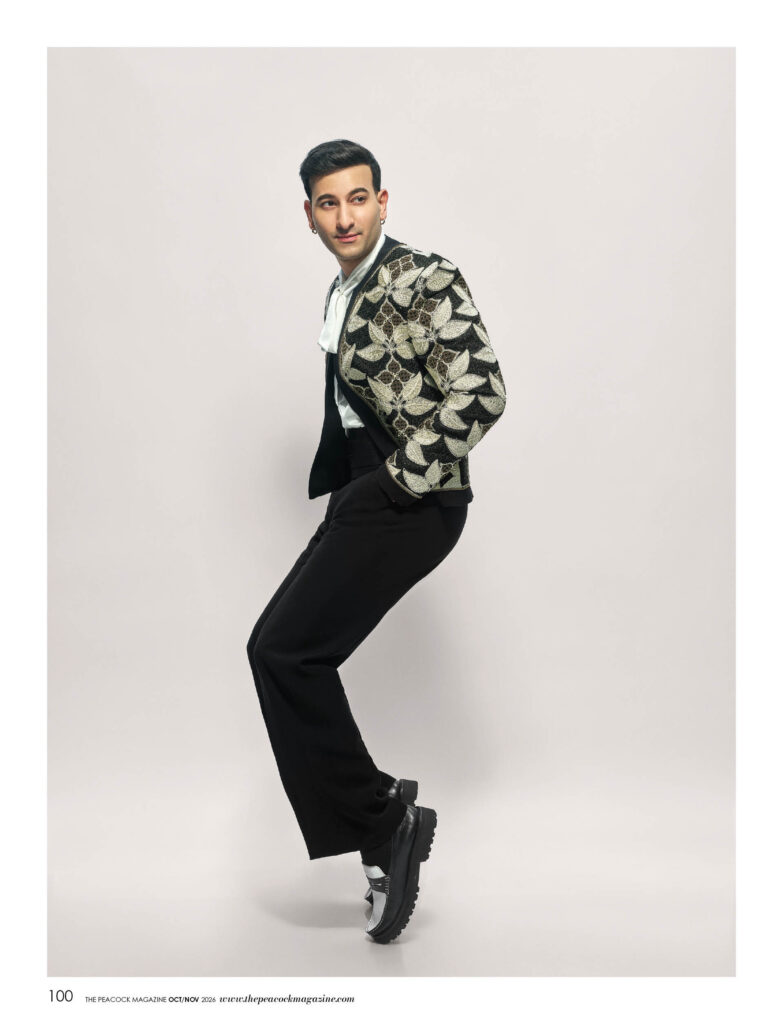
More than being a music artist himself, he is more of a music enthusiast. He is someone who likes to shift between frames, have fun while on shoot, and listen to music from his crazy playlist. You will find a lot of Michael Jackson tracks, a touch of hip-hop and jazz along with a bit of Carnatic tunes. But when he brings out his weapon – his sitar, he becomes completely different. From donning a multi-colored jewel-accented sherwani to slaying in a denim-on-denim look and casual sweatshirt, Rishab Rikhiram Sharma exuded glam in every frame for this issue of The Peacock Magazine. He has opened up about his family’s legacy, Ravi Shankar’s influence, his musical collaborations, and more. Read on.

Q) Would you like to speak about your family’s musical legacy? How did your musical background nurture your artistic expression?
Rishab Sharma (RS): I was very fortunate to grow up in a family where music was part of everyday life. It was never treated as something separate or extraordinary; it was simply always around me.
My father was my first teacher, and much of what I understand about discipline, listening, and respecting the instrument came from him. Because of my family’s work with instruments, I also had the rare privilege of being backstage at many concerts. My father would often fine-tune artists’ instruments just before they went on stage, and I was able to observe, from very close, the quiet preparation behind a performance.
Seeing how great artists carried themselves, stayed composed, and respected everyone around them became an important part of my upbringing. The legacy gave me a strong foundation and a place to begin, but it also encouraged me to find my own relationship with the sitar. I have always seen it as something to be grateful for, rather than something to hide behind.
Q) What were the biggest challenges you faced when starting out?
(RS): One of the biggest challenges was finding my own identity while being associated with a long musical legacy. I was grateful for the guidance and opportunities I received, but I knew that people would connect with the music only if it felt honest and personal.
I also found it challenging to translate Indian classical music for listeners who may not have grown up with it. Its depth and structure can sometimes feel distant at first, so I wanted to present it in a way that felt relatable to today’s generation without diluting the character of the music.
I would share ideas with friends, conduct small demonstrations and workshops, and pay close attention to what helped them connect. Through a great deal of trial and error, I slowly discovered how to communicate with a wider audience musically. Finding that voice and articulation took time, but it has become one of the most rewarding parts of the journey.
Like most artists, I also went through periods of doubt and uncertainty. Over time, I learned to focus more on the work and less on trying to control how quickly things should happen.
Q) How was it charting your musical journey for nearly a decade in New York?
(RS): How did the city shape your sound and help you find your own musical identity?
Moving to New York was one of the most important things to happen to my musicality. I initially moved there to study, but I had always wanted to travel the world, experience different cultures and eventually share my music with audiences everywhere.
The city exposed me to an incredibly expansive range of sounds. I was able to explore hip-hop, rap, jazz, Western classical music and different sub-genres of electronic music in a way I had not experienced before. My classical training and roots remained unchanged, but New York widened the way I listened and thought about music.
I had always been interested in producing electronic music, but for a long time I had not found the right space where that knowledge could meet Indian classical music naturally. During my college years, I began discovering that balance, and it felt like a major revelation. It helped me understand my own musical language more clearly and shaped the musician I am today.
Being away from home also gave me the space to understand myself better. I met artists from many different backgrounds, and those interactions showed me that you can remain deeply connected to where you come from while still being open to new ideas.
I also stopped trying to fit into a fixed idea of what a sitar player should sound or look like. Even now, I do not see my sound as something complete or permanent. It continues to evolve as I learn, grow and experience life differently.
Q) Today, music trends are often shaped by Instagram algorithms. Does that impact your artistic process?
(RS): Social media has helped music reach people in a way that was not possible earlier, and I am grateful for that. Someone may discover the sitar through a short video and later become curious enough to attend a concert or listen to a complete composition. That is a beautiful entry point.
Even while exploring short-form content, I have tried to preserve the integrity of the ragas and the traditional music as much as possible. I was inspired by Guruji’s 78 RPM recordings, where an entire raga had to be presented within a very limited duration because of the recording format. Those performances showed how much depth could still be communicated in a few minutes.
That idea influenced the way I approached reels and shorter musical pieces. I tried to make them accessible without reducing them to a trend, and that balance has worked well for me.
At the same time, I do not think about algorithms, numbers or trends while creating. The creative process needs privacy and honesty. Once the music is ready, we can think about the best way to share it, but while making it, I focus on whether it feels true to me.
Q) What guides your creative process? How do you begin composing a new track or an album?
(RS): It usually begins with a feeling or a small musical phrase.
Sometimes I sit with the sitar without any plan to compose. I may play something repeatedly, and slowly it begins to take a direction of its own. At other times, the starting point may be an experience, a thought, a place or something I have been carrying emotionally for a while.
I try not to force the process too much in the beginning. Once the central emotion becomes clear, I start shaping it more carefully and thinking about the arrangement, structure and the larger world the piece belongs to.
Every composition has a different journey, so patience is very important. I try to listen closely and allow the music to reveal what it needs.
Q) How do you see Gen Z connecting with classical music?
(RS): In my experience, Gen Z seems to be connecting with classical music even more actively than the millennial generation did. Once the pressure of having to understand every technical detail is removed, young listeners respond to it very naturally.
You do not need to know the name of a raga or understand its entire structure to feel something while listening to it. Gen Z may discover the music through social media, films, collaborations or live clips, and all of those are valid entry points.
I have always wanted to be someone who introduces, or reintroduces, Indian classical music to the current generation. My hope is that this first connection encourages listeners to continue their own journey and discover great maestros such as Pandit Ravi Shankar ji, Pandit Nikhil Banerjee ji, Ustad Vilayat Khan sahab, Ustad Rais Khan sahab and the many other artists who have made extraordinary contributions to the art form.
What matters most is that the first experience feels open and relatable. Once that emotional connection is made, curiosity usually follows.
Q) Pandit Ravi Shankar transcended the traditional boundaries of classical music. What is your take on artistic collaborations?
(RS): The best collaborations happen when the artists involved genuinely respect one another’s musical identities.
For me, it should never be about adding the sitar simply to make a song sound Indian or different. The instrument should have a meaningful voice and purpose within the music.
I enjoy collaborating with artists who are curious, willing to listen and open to allowing the process to develop naturally. When both sides approach the music with sincerity, the result can feel very organic.
Collaborations can also introduce listeners to traditions and sounds they may not have discovered otherwise, which is exciting. But the intention behind the collaboration will always matter more than the combination itself.
Q) Do you have any rituals before you go on stage?
(RS): I usually need a little quiet time before a performance.
There is often a lot happening backstage, so I like to step away for a few minutes, sit with the sitar and make sure I feel settled. Tuning the instrument is also a very grounding process for me. It helps shift my attention away from everything happening around me and brings me back to the music.
I normally take a moment to feel grateful before walking onto the stage. After that, I try not to overthink the performance. I listen, respond to the audience and allow the evening to unfold in its own way.
Q) You’ve been associated with events that spotlight mental health. What inspired you to dedicate your music to such an important message?
(RS): I have long felt that our generation, in India and across the world, is facing a serious mental health crisis. Gen Z is certainly more aware of mental health than generations before us, but many of us still find it difficult to speak openly about what we are going through. The awareness is there; I think we now need to make the conversation more honest, comfortable and accessible.
After going through my own struggles, I understood more deeply how important mental health is. Music had always helped me process emotions that I could not easily explain in words, and that personal experience made me think about how it could create a gentle space for other people as well.
Sitar for Mental Health began with the intention of spreading awareness and creating a space where people could slow down, reflect and feel connected.
It is important to be clear that music is not a replacement for professional help or therapy. But it can offer comfort, reflection and a sense of shared experience. Even if someone leaves a concert feeling slightly lighter or less alone, that feels deeply meaningful to me.
Q) What’s something people often assume about you that isn’t true?
(RS): People often have a certain perception of what an Indian classical musician should be like, and I have never completely related to that idea.
I enjoy Indian classical music as deeply as I enjoy rap, hip-hop, EDM and many other forms of music. I am a big hip-hop listener, and I have never believed in looking down upon one form of music in order to respect another. Every genre can communicate something honest when it is approached with sincerity.
Whether it is the music I make, the way I dress in everyday life or how I present myself on stage, I have always tried to find my own mode of expression. Together, these choices are one honest expression of who I am as an artist.
Q) Looking back, what’s one piece of advice from your father that has stayed with you throughout your journey?
(RS): My father has always reminded me that the emotion behind the music matters as much as the technique. You can practise for years and play every note correctly, but the audience will connect only when you are genuinely present in what you are playing.
He also taught me to respect the instrument during the hours when no one is watching. Concerts are only one part of the journey; most of the real work happens quietly through practice.
Most importantly, he has always encouraged me to remain grounded, humble and respectful towards everyone who teaches me something. Whether it is your guru, an elder or someone who has shown you even a single phrase of music, that contribution deserves gratitude and respect.
That advice continues to stay with me. It brings me back to the values with which I began and reminds me that learning never really ends.