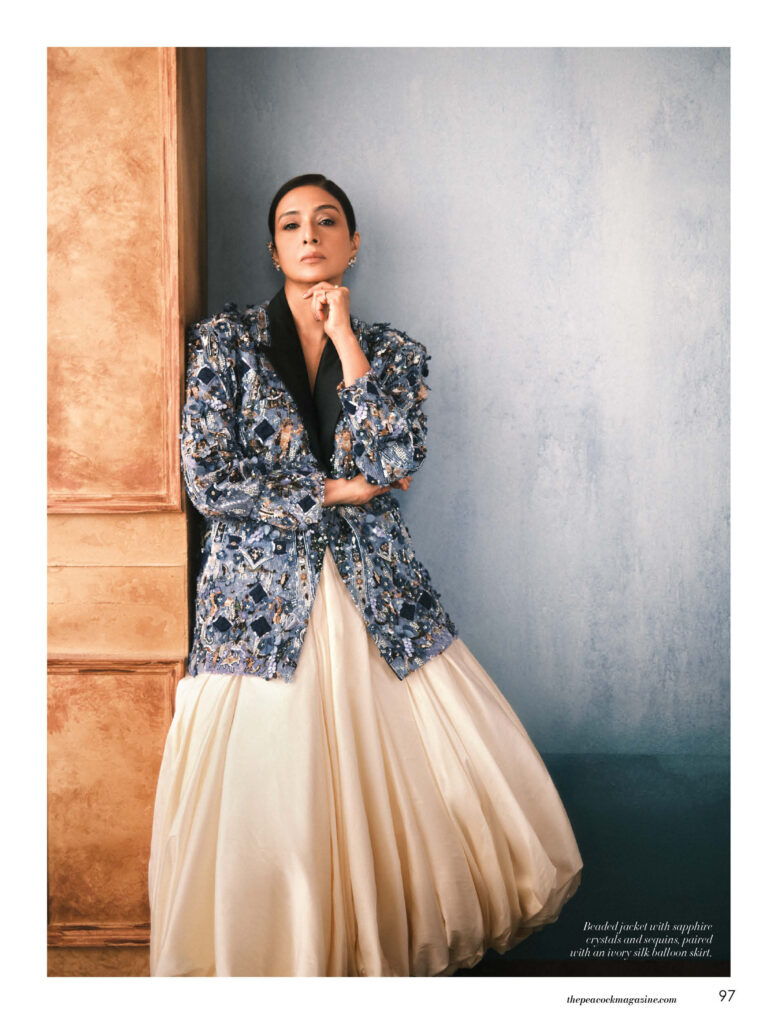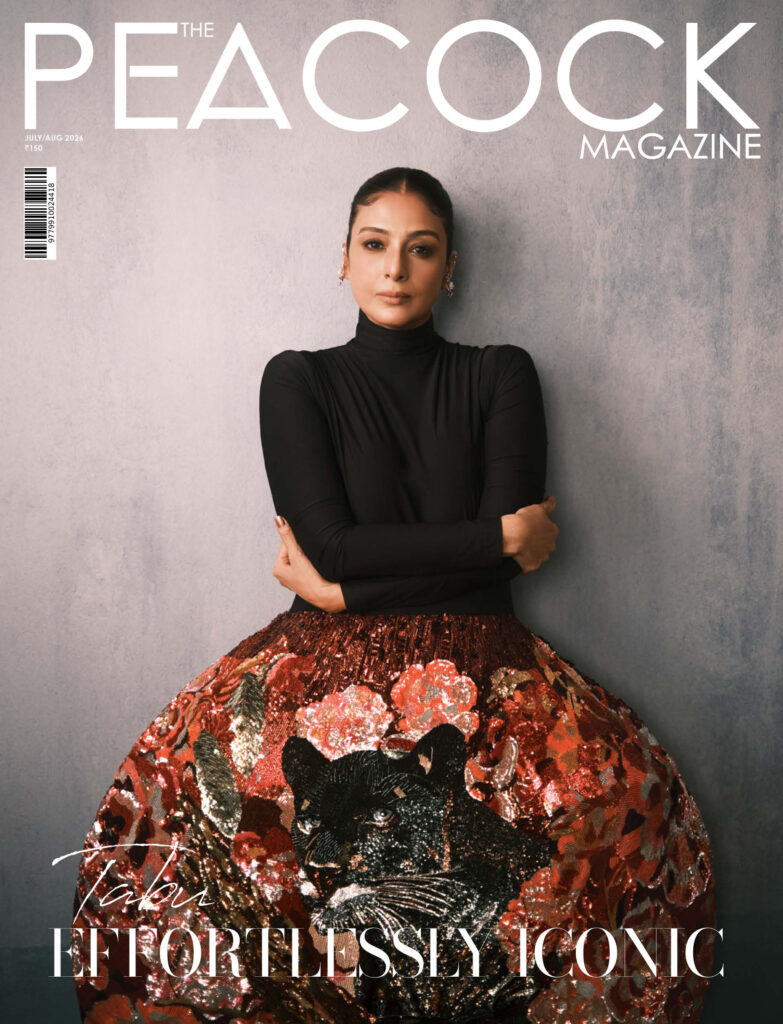
CREDITS:
Photographer – Vaishnav Praveen/House of pixels
Stylist – Gopalika Virmani Gurwara
Hair – Sanky Evrus
Makeup – Mitali Vakil
Jewellery – Rare Heritage, Kantilal Jewellers, Maya Sanghavi Jewels
Styling Assistants – Neha Reddy, Trushieta Naringrekar
Production – FSP Production
Executed by – INega Production
Art Direction – Nikita rao
PR & Artist’s Management – Mili Savla
Wardrobe – Falguni Shane Peacock
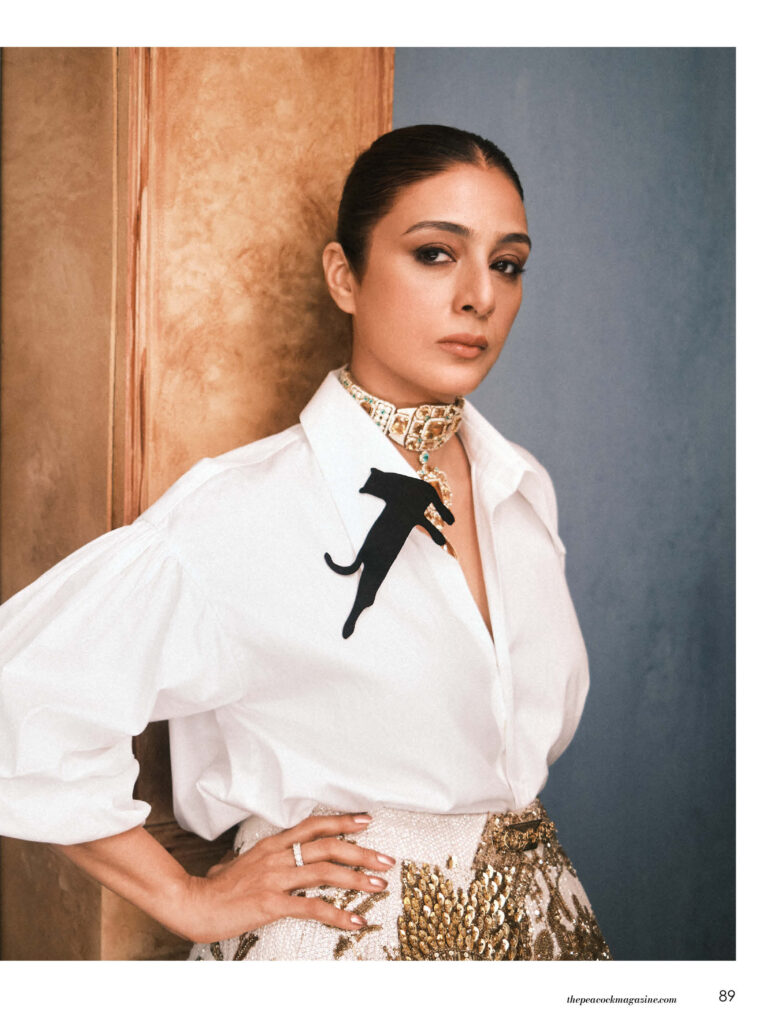
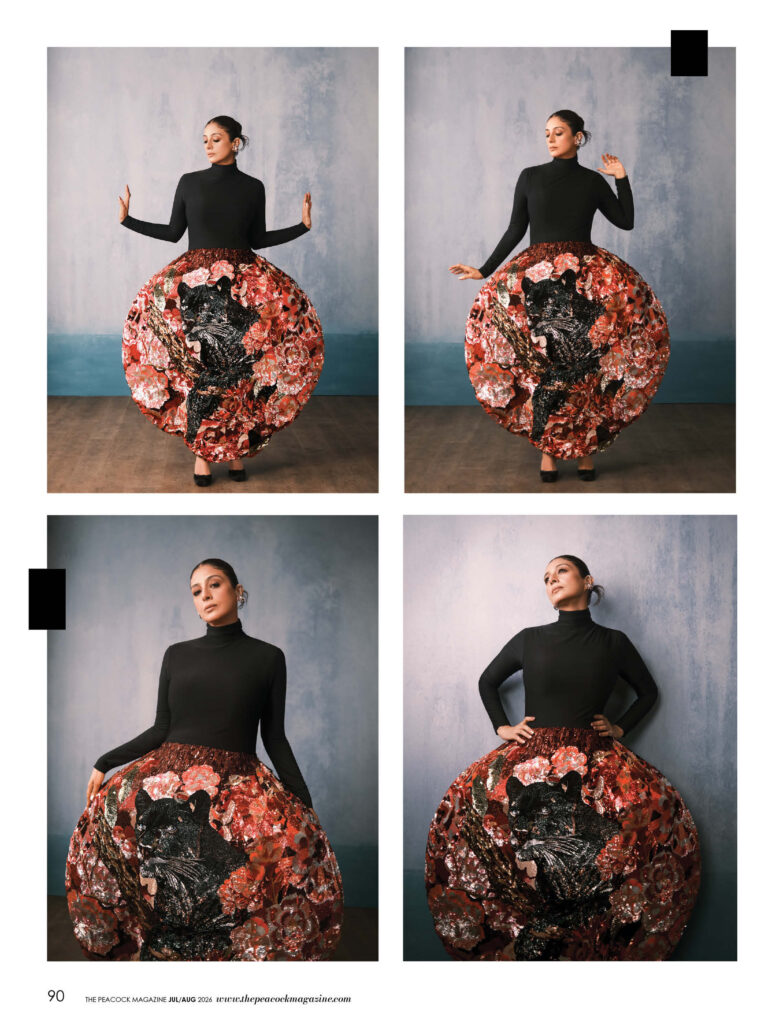
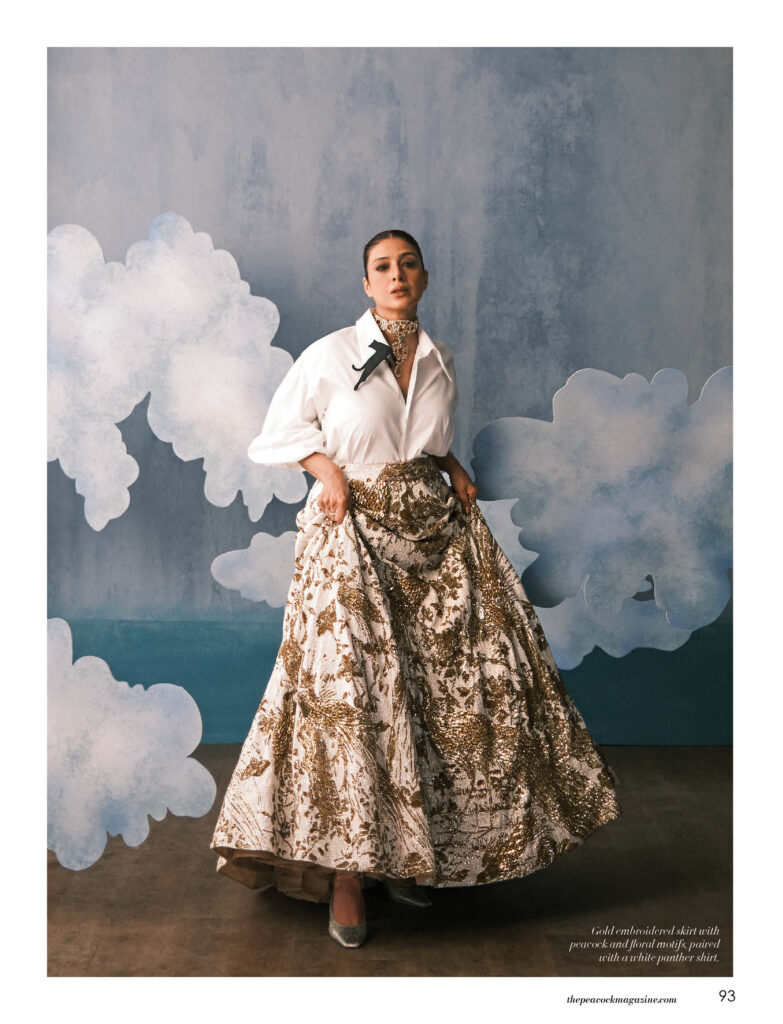
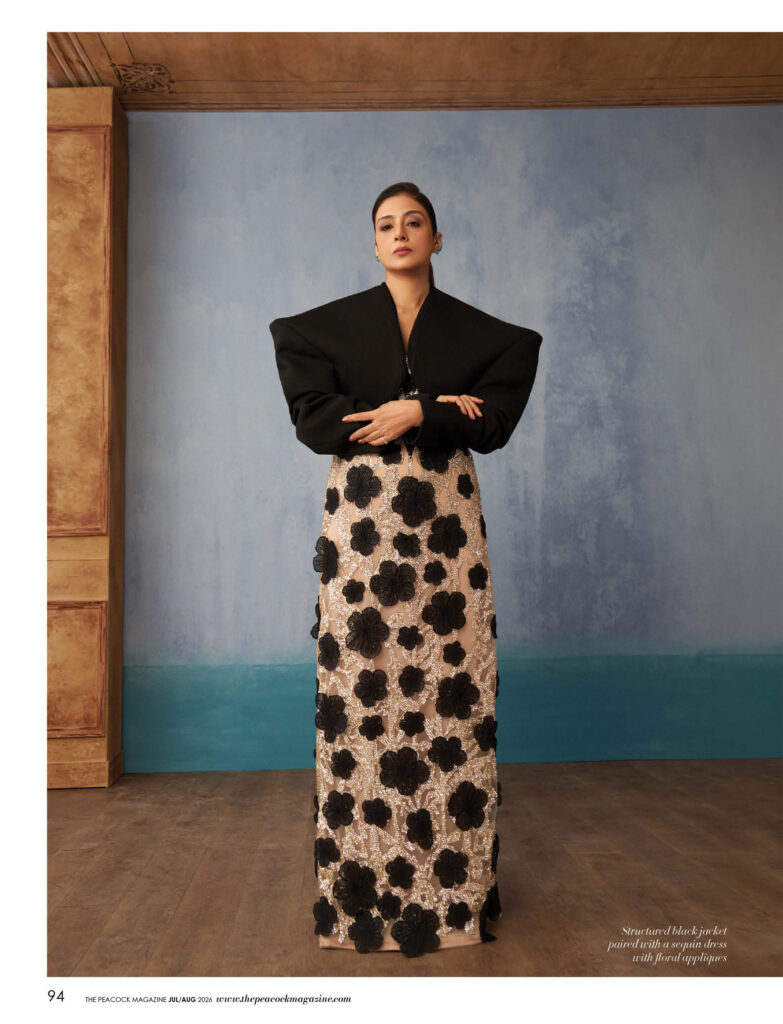
The talented actor on her cinematic triumphs, roles which shaped her and staying true to her metier…
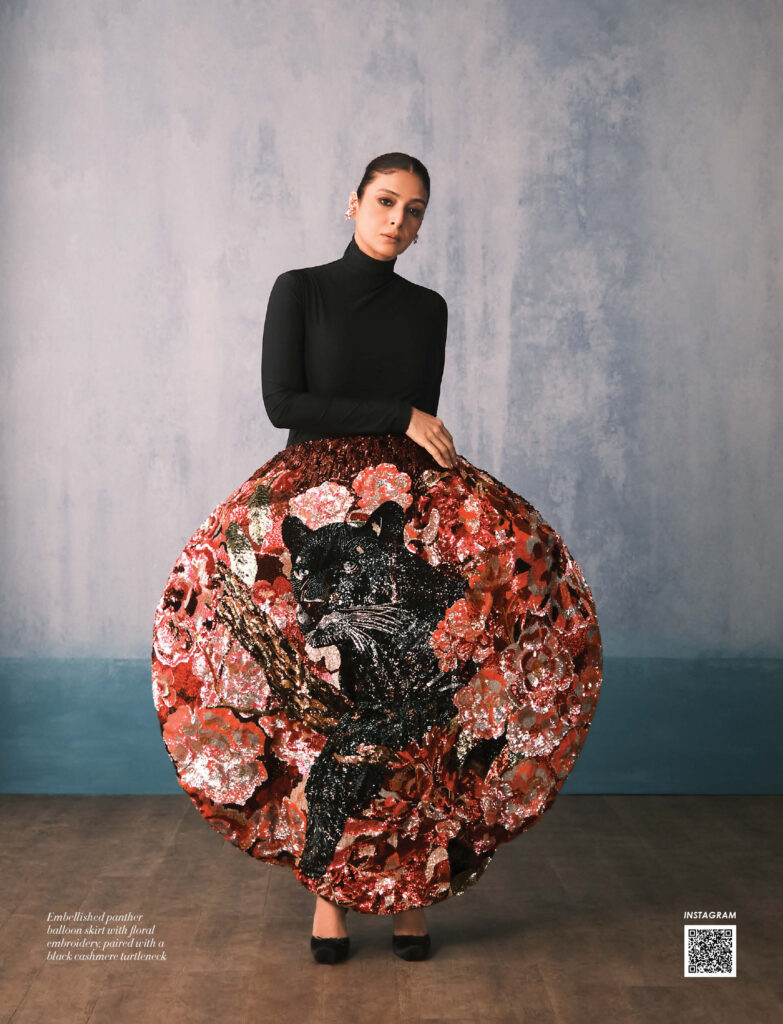
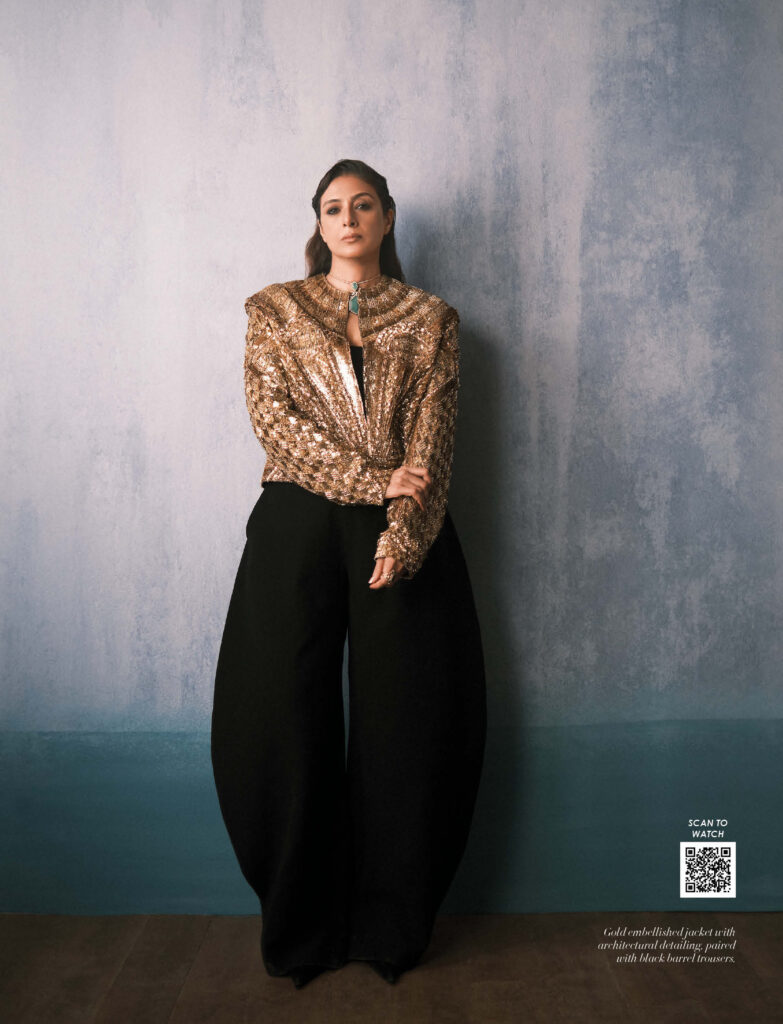
Very few actors can boast of such an impressive and diverse body of cinematic work. From Chandni Bar to Maqbool, from Astitva to Namesake, every role remains clearly etched in one’s mind. Her compelling on-screen persona, ability to essay just about any challenging role under the sun with ease and conviction and her unquestioning allegiance to her craft makes her one of the most extraordinary actors in Bollywood. Over decades, she’s aced the art of making a litany of layered and unconventional characters truly memorable on the silver screen with her own infectious energy and brilliance. Commercial or non-commercial, art house or offbeat—it’s hard to put her in a box. As she’s often defied those rigid brackets and carved her own distinctive path in cinema with passion, honesty and reinvention. When The Peacock Magazine caught up with the ageless beauty, she came across as a vibrant spring bloom—full of vigour, vitality and vivacity. Ask her just about anything and there’s no hint of pretence or evasiveness. She answers each question with her characteristic wit, honesty and humour. For instance, when asked what advice she’d give herself before entering the film industry, she smiles before breaking into a giggle. “Don’t believe everything everyone says and don’t take everything at face value.” Don’t believe it when they say, ‘We don’t have a budget’ (laughs). Because film people are dramatic sometimes and if you are not from the industry, you wouldn’t know and you would believe everything everyone says to you. There’s much slip between the cup and the lip here,” she quips.
Words of wisdom indeed for anyone who wants to chart a course in the world of cinema.
In a freewheeling chat with The Peacock Magazine, the legend talks about the ideas and influences that shaped her and the evolution of the industry at large. Over to her…
As an actor, were you ever misunderstood?
I don’t know how people interpret me as an actor. I’m sure they took time to figure out what I want to do, what I don’t want to do and what my priorities are. But as a person, I was mostly misunderstood in the beginning. Apparently that happens with a lot of us. Especially when you are new to any place, business, profession, city, or a group, people take time to understand you and I think somebody like me has mostly been misunderstood. People often tell me now, ‘you know you’re very different, we had a different impression of you.’
Maybe because I was not a very social person and people did not get the time or closeness to understand me well. Or people just happen to misunderstand others if it suits them too. But there is a difference between being misunderstood and not being understood. I feel it takes a while to build a relationship with people to understand them. Though, I never relied on people’s understanding of me, because we are working with hundreds of people daily and everybody does not need to understand you. However, sometimes it’s not nice if people have misunderstood you in a wrong way. But now I guess most people who know me, understand me.
Your choice of films has been unconventional. How challenging or creatively satisfying were these roles?
I think and I believe that the layered and unconventional roles that I have chosen came largely because I am like that. So, it was
easier for me to connect to those characters. It was exciting as an actor professionally, and creatively. That’s what my endeavour was to do—something that demands more from me, engages me, challenges me or just gives me the space to explore my own abilities. I like to delve into characters that are not one-dimensional because I find them boring and I’m sure people find them boring too. I wanted to play roles that people would engage with. And though it was not a very common thing to have because, not a lot of people were writing those kinds of roles and I kept waiting. Internally, I knew that I wanted to do roles like that and when they came to me, I realised—it was a brilliant path for me and that’s what I really, really enjoyed.
How much has success changed you as a person?
I mean success changes, success is going to change people, not just actors, success will change anybody. In what measure that differs, I mean externally things might change, your behaviour might change, I don’t know if it changes you as a person, like inherently, and you just deal with the changes, that’s it.
How did you stay authentic to yourself in an industry constantly chasing reinvention?
Well, not just the industry, I guess the world too. The industry is always chasing reinvention, but I don’t think they’re chasing reinvention so much. There are some things that will not change and I also feel that authenticity at every stage of your life is ever evolving. Of course, there’ll be a basic you but we are always constantly evolving and as human beings. You adapt when you’re reinventing yourself because that is also part of being your authentic self and your truth.
By truth I mean not the truth about good and bad, truth and lies but as you’re changing, you’re automatically reinventing and I don’t think of it like that. I don’t know if there is a separation between being authentic and reinvention. We are all constantly evolving and changing and how you’re changing is reflected in your work and not just your your fashion and appearance.
Do you ever think about projects you didn’t do?
No, I don’t really think about it at all because I’m very busy doing what I’m doing. And I’m happy and satisfied with where I am.
Did you ever think of taking a break from films?
No, I never thought of stepping away from films completely. I don’t think it’s possible for me or for anybody. You can go on vacation for a few weeks and come back, that’s it.
What are you ambitious about?
I think from my assessment of myself that my relationship with ambition hasn’t changed much, not to a large degree. I am as ambitious as I was years ago. There are a few things that I will always be ambitious about, like doing good work, working with interesting people, trying to break the predictable mould and that, has not changed at all.
What is the kind of stories you wish Bollywood talked more often about women today?
I wish we told more stories about how women deal with broken relationships. I don’t think we have enough focus on how women deal with heartbreak, and broken relationships and how they conduct their life and what is their process of dealing with it. And I am not just talking about healing from it.
Mostly in movies it’s either about when the film ends, when a relationship ends with heartbreak or the heartbreak is healed and somebody else comes into their life and that’s great. But the individual process of dealing with loss, I don’t think we have enough stories on that, and I really wish we had that because loss is a huge part of anybody’s life, men, women included. But if you’re asking about women, yeah, I would like to see more stories like that because unfortunately, women do go through a lot of heartbreaks in different ways.
What keeps you curious about acting after all these years?
It’s because it’ll never be the same on any two given days and that’s the thing that I’m curious about. So, I guess that’s the fun part and that’s what is exciting about being in the movies is that you don’t know what is going to happen on set because there are so many people involved. So, I’m always curious how the scene is going or how today’s shooting is going to turn out.
What would you say was the defining moment in your career?
I think Maachis should be the defining point where I got my first National Award, that too so early in my career. I think filmmakers saw me differently after that. Kaalapani, Maachis, Hu tu tu, these films.
How do you shield your individuality?
If you are an individualistic person like I I am, then you don’t have to work so hard or there’s no method to really protect your individuality. Everybody is an individual. I mean, it varies from person to person if they want to fit into a box that is not likely their personality, which is fine. And sometimes you are fitted into a box which is like you, and that is also fine. Everybody, like I said, is an individual. And if you don’t want to fit into boxes because you don’t like that box, then you shouldn’t go into that box. It’s as simple as that. And I think it’s a very natural thing. Either you are that person or you’re not.
How did you strike a balance between commercial and unconventional films?
Well, I don’t know if it was intentional or instinctive. Instinct is also intention— its knowing that it will work for you. And it was, I considered myself very fortunate that commercial mainstream filmmakers, and the critically acclaimed filmmakers —they all came to me with their movies. And I felt it was the best thing for me to do. I was so lucky because it’s not easy for everyone, rather, it’s easier to get stereotyped. And I think my greatest strength has been that I haven’t been stereotyped. Nobody could stereotype me. So, I think I had a great advantage. And I just took both these worlds of cinema with open arms and, you know, and I enjoyed everything that I did. I did things only if I liked them. And you know, it will be good for me, and for the project. And that has been my greatest strength—that I could do both and be successful in all kinds of cinema.
After such an extraordinary journey, what scares you or excites you as an actor?
Working with new people who come up with different ideas, different thinking, and different ways of shooting a film, a scene, and, that always excites me. A new role, a new way of portraying the character. and working with people, who I’ve never worked with, is always something very, very exciting. It’s because you’re guessing, and you’re curious. And the process is like a new beginning all over again. Yeah, so that’s the exciting part of working with new people.
Are there films that changed you as a person?
Maachis, Astitva, Chandni Bar, Andhadhun and Hu tu tu changed me. Maqbool changed me to a huge extent, and Haider changed me a lot. Definitely, as an actor, as you keep working with different scripts, directors, characters, and you keep evolving. Acting is not like a fixed thing that, you do tagain and again. You’re not a machine. So, definitely, Haider changed things to a large extent.
You have learned classical Hindustani music. Do you still practise it?
Yes, I have learned classical Hindustani music, and it is my greatest joy and passion, and it is something that comes naturally to me, thankfully. My mom sings very well, and music has been a big part of our household. I enjoy music, we love music. I’ve grown up on music, and I can’t imagine a life or even a single day without either listening to music or singing something. Unfortunately, it’s bad that I don’t do my riyaaz regularly and I know my masters are very unhappy about this, but I really want to devote more time to my singing practice. I was always interested in learning to play the guitar and these days, that’s my new interest—guitar and flute. I believe that music is the best thing that happen to the world, and to this universe. It not even something that has been invented, it’s just been part of the universe, the world, this earth, nature, everything.
So for me everything is music, you know, and singing makes me feel great. Every mood of mine, in every mood of mine, singing and music has been my constant companions.
Any role that still feels special?
There are a few. There’s not just one because I have done such fantastic, brilliant characters that the filmmakers gave me. Of course, Maqbool, Haider, Cheeni Kum, Astitva, Chandni Baar, Namesake, Andhadhun, De De Pyaar De. Yeah, I mean there’s so many special characters and roles that I have done. Why? because they were just very interesting people and they really became a part of me for as long as I was doing that film and of course, a part of that you know. You bring back their traits, their characteristics. You think about them, you think about their lives, and they were just so much fun to play. And the directors I worked with on these roles the collaborations were so nice.
Any role which has stayed with you?
The role which has stayed with me will always be Maqbool.
You have a flair for languages. Comment.
Fortunately, I’m blessed with a flair for languages. I love speaking different languages because I like the sound of different languages . Luckily I grew up in Hyderabad and Telugu was my second language, so I could do so many Telugu films and then Tamil and Malayalam and I love Bangla as a language so I learned it for a Bengali film too. I did my own dubbing and I do my own dubbing in Telugu movies too. In short, I just love to learn new languages. I also learned Spanish and French and it’s been so fun to work in different languages. I believe every language has its own rhythm like cinema whether it’s Telugu, Bangla, Malayalam, or Marathi they all have their own rendering of you know dialogue and their own nativity which is so much fun.
How do you handle fame?
I guess everything comes with a price. Fame will come with a price because fame is a very weird phenomenon. According to me, it’s not a normal thing. So sometimes, it feels like there is a stake involved. Your personal freedom, your ability to express exactly who you are in public changes. And it’s just natural that a part of you is going to have to remain quiet. Sometimes, not all the time. But I guess every famous person makes that adjustment and accepts the fact that there is a give and take. And you have to learn to live with it. But I want to believe that there are also some fantastic things that you can do with fame.
What has cinema taught you about yourself?
It has coloured my personality, I feel. It taught me a lot about resilience, self-expression and relationships. It has also taught me that I am a people’s person. I don’t know. But it has really shown me that I am a never-say-die person.
How do you see the evolution of the film industry over the years?
Working across generations, I mean, it’s impossible for me to answer this question because there are too many things. If I talk about how Bollywood has evolved emotionally and creatively, it’s not an easy answer. I mean, I’ll have to write a book on that. But of course, like everybody, I have seen the change and I’ve experienced it. But I must say that for me, the change hasn’t felt so drastic because the kind of films, the people and the kind of work I liked to do came my way mostly. It is—I’m still working with the same people. I mean, the technique has changed. I don’t know if it is better, but it has changed. I mean, in so many ways it has evolved.